
How can vision therapy help your child with learning and concentration?
31. October 2024
Correct vision is a crucial factor for success in school. Vision plays an important role in reading, writing, concentration and other key school skills. Many parents are unaware that their children may have hidden vision problems that limit their school performance. It's not just visual acuity itself - i.e. whether the child can see clearly up close or at a distance. However, in many cases, multiple factors are to blame. E.g. accuracy of fixation, localization, sensitivity to contrast, color perception as well as the ability to accommodate and coordinate both eyes, visual memory and many other functions and skills can affect the correct processing of visual information in a child.
The problems with vision that children face can have a negative impact not only on their performance and coping with their duties at school, but they can also adversely affect the children's psyche. The key areas where the quality of vision plays a big role are the following:
- Ability to read and write: Children with vision problems may have difficulty recognizing letters, words and reading text, which can lead to lower comprehension and performance in school.
- Attention and concentration: Vision problems can cause fatigue and frustration, which can negatively affect a child's ability to focus on lessons and tasks.
- Participation in Activities: Children with poor vision may have limited participation in activities such as sports and group games, which can affect their social interactions and overall development.
- Self-Esteem: Vision problems can affect a child's self-esteem. Children who feel insecure about their abilities may have less motivation and lower academic performance.
Why is proper vision essential for reading and learning?
Think of reading as a coordinated action that requires both eyes to work together without a single hesitation. This process can be difficult for children with hand-eye coordination problems – children can easily get lost, skip lines or skip words when reading. However, visual problems can also affect the ability to concentrate and maintain attention for a longer period of time. When reading and writing, not only visual acuity is necessary, but also a good visual memory, which allows children to quickly navigate the text, distinguish the shapes of letters or store visual information.
Like reading, writing requires hand-eye coordination. If a child cannot follow a line accurately, they may have difficulty placing letters on the page, resulting in frequent errors and slow typing. Children with such difficulties are often unable to stay on task for extended periods of time, which can lead to feelings of exhaustion and stress.
Symptoms that may indicate the need for vision therapy
A key question that is likely to be on every concerned parent's mind is how do I actually know that my child has vision problems and what are the signs that might indicate that something is wrong with the child and that they need help in this regard. In particular, it is good to note the following:
1. Orientation problems
- Difficulties reading and writing: The child may have difficulty distinguishing between letters or numbers, make more mistakes when writing, or read more slowly than others.
- Loss of fixation while reading: If a child frequently loses fixation while reading or fails to follow the lines, this may be a sign of eye problems.
2. Item Tracking
- Inability to track moving objects: A child may have difficulty tracking a ball or other moving objects, which may affect their ability to participate in sports.
3. Eye behavior
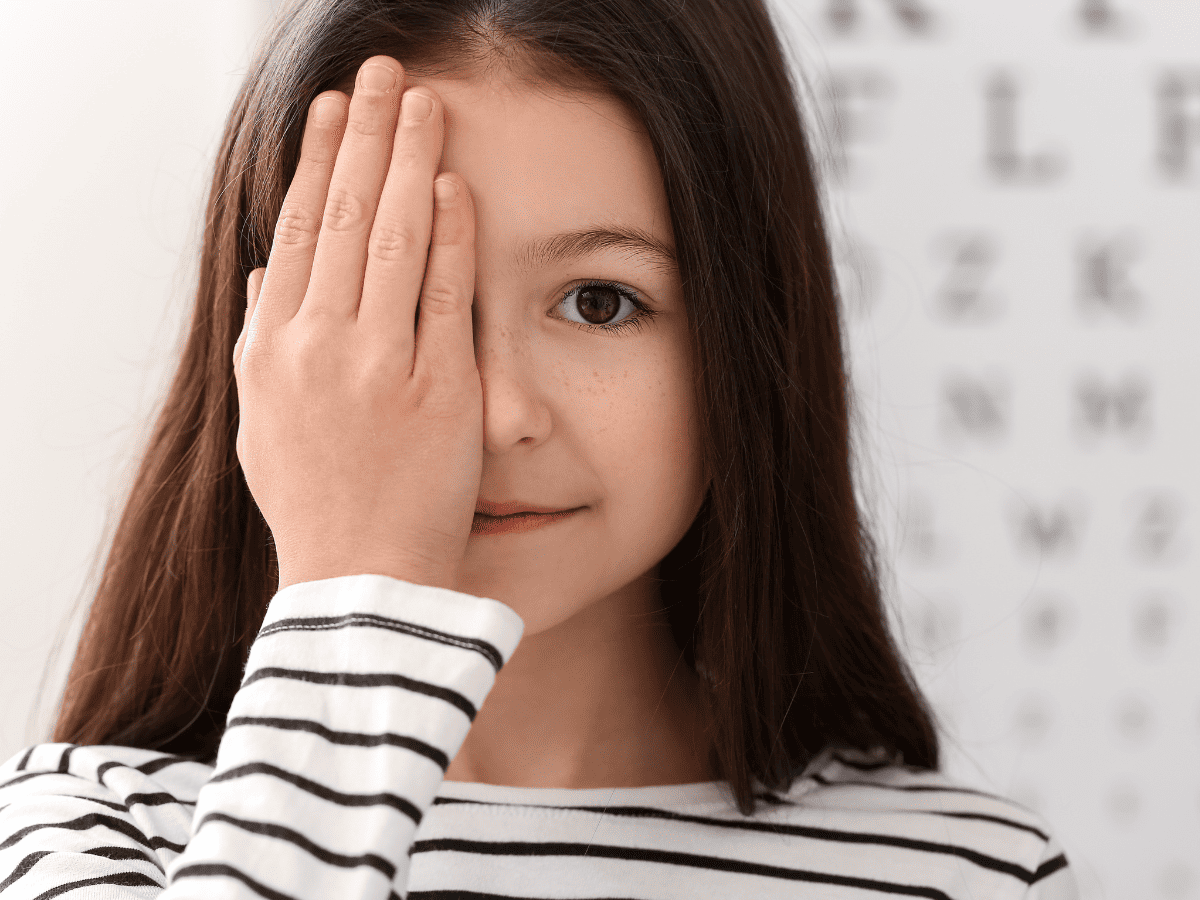
- Closing one eye: If a child frequently closes one eye or tilts his head while reading or watching TV, this may indicate that he is trying to improve his eyesight.
- Eyestrain: A child may often rub their eyes or complain of eye strain after reading or writing for a short time.
4. Distance from objects
- Getting closer to learning materials: A child may hold a book or tablet too close to their eyes, which may indicate problems with distance vision.
5. Complaints of pain
- Headaches: If a child often complains of headaches after reading or working on close objects, this may be a signal of vision problems.
- Screen strain: Parents should pay attention if a child shows signs of fatigue or discomfort while watching TV or playing video games.
6. Difficulty concentrating
- Inability to maintain attention: If a child is easily distracted or has trouble concentrating on tasks, this may be due to vision problems.
If you observe similar symptoms in your child, it may be advisable to have the child examined by a specialist who will evaluate not only the acuity of his vision, but also other key visual functions.
What exactly is vision therapy and how can it help?
Vision therapy is a medical discipline that develops visual functions and skills. It focuses on diagnostic, treatment, rehabilitation, preventive and assessment activities. In contrast to an eye examination, the aim of which is to diagnose visual defects and cure the diseased eye, vision therapy aims at the functional aspects of vision – i.e. the child's ability to effectively use vision when reading, writing and other activities.
Vision therapy involves a series of exercises that may include:
Improving eye coordination so that the child can follow the text and read fluently without skipping or skipping
Strengthening of visual memory, which is key for recognizing letters, words and their correct order
Visual attention and concentration training so that the child can maintain attention while working on longer tasks
Exercises aimed at relaxing the eyes, which helps prevent fatigue and promotes long-term concentration
At the Ponseti Clinic, vision therapy is led by experienced professionals who will create a therapy plan tailored to each child's needs. Therapy includes both clinical sessions and practical exercises that children perform at home under parental supervision. The combination of professional guidance and home training ensures that the child makes long-term progress, which is reflected not only in their reading and writing skills, but also in their confidence and overall school performance.
If you suspect that vision may be affecting your child's school performance, do not hesitate to contact a professional. A child who experiences difficulty reading or concentrating may not just be suffering from a lack of motivation. Thus, vision therapy can be the key to uncovering the hidden difficulties that prevent it from reaching its full potential. Early diagnosis and proper care can significantly improve school results, and above all, bring more joy and self-confidence to your child.
Do you want to consult? You can make an order on the phone number +420 607 001 007 or via the e-mail address info@ponseticlinic.cz.
We are Ponseti Clinic. We give strength to rise.