
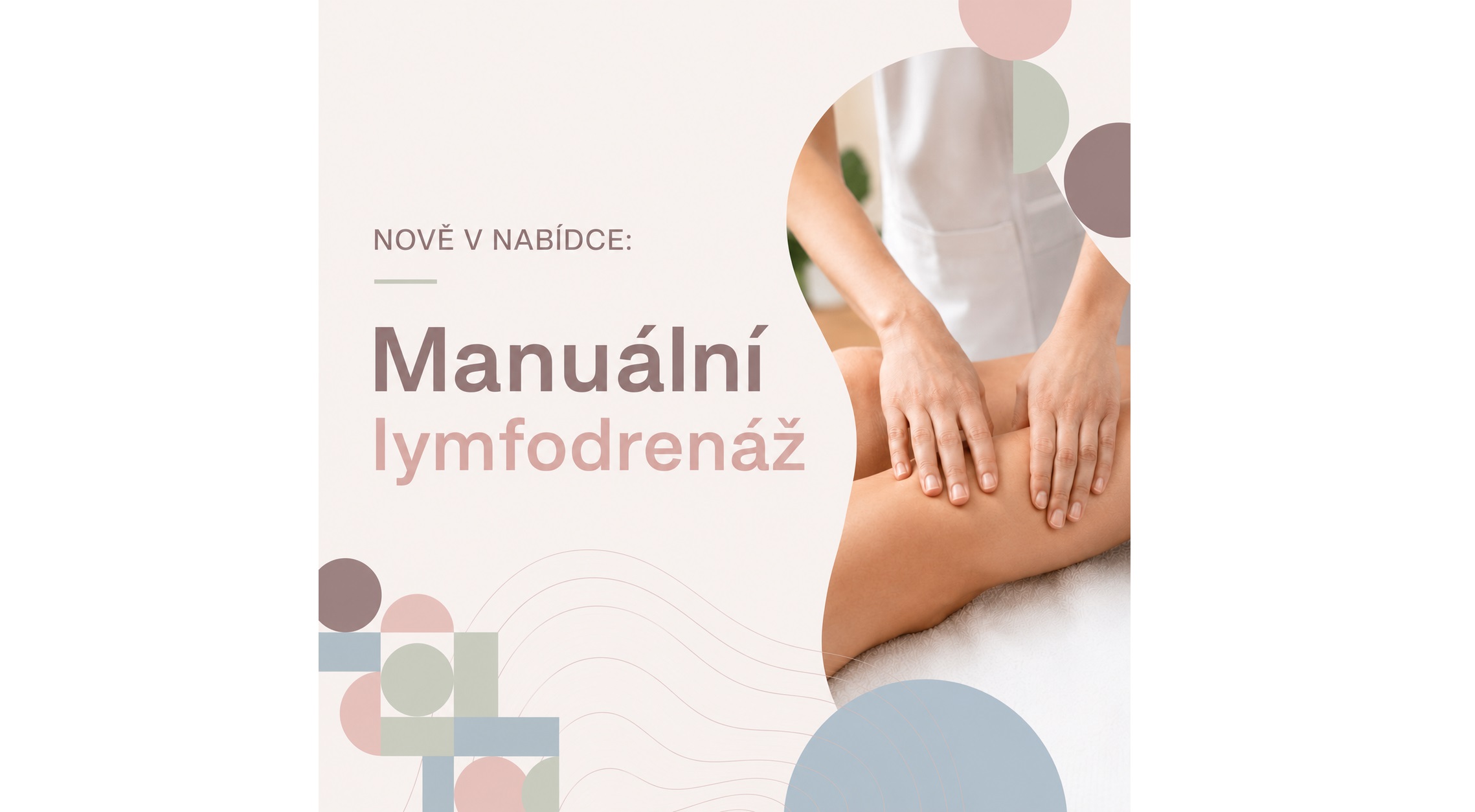
New at Ponseti Clinic: Manual lymphatic drainage
18. July 2026
We are expanding the offer of physiotherapy care at the Ponseti Clinic to include manual lymphatic drainage, sometimes also referred to as manual lymphatic drainage. It is a specialized therapeutic technique that supports the natural activity of the lymphatic system and the drainage of excess fluid from the tissues with gentle and precisely guided touches.
Manual lymphatic drainage can be beneficial not only for swelling and problems related to the locomotor system, but also in the field of regeneration, convalescence and aesthetics. The therapy can help relieve the feeling of heavy limbs, tissue tension, swelling after injuries or surgeries and promote general relaxation of the treated area.
Manual lymphatic drainage at the Ponseti Clinic is performed by a qualified physiotherapist. The service is intended for self-payers and is not covered by public health insurance.
What is manual or manual lymphatic drainage?
The lymphatic system is involved in removing excess fluid, waste materials and other particles from the intercellular space. If its function is slowed down or impaired, fluid can accumulate in the tissues, causing swelling, heaviness, tension or restricted mobility.
Manual lymphatic drainage uses slow, gentle and rhythmic touches that are guided in the direction of the lymphatic pathways. This is not a classic or deep massage. The pressure is considerably milder and the technique is adapted to the flow of the lymphatic system and the current needs of the client.
Each treatment of another part of the body is always preceded by a treatment of regional nodes in the neck area. This prepares the central lymphatic channels for subsequent treatment of the selected area.
Benefits for the musculoskeletal system
In the field of physiotherapy, manual lymphatic drainage can help especially with conditions associated with swelling, pain or limited mobility. Accumulated fluid can increase tension in the tissues and impair range of motion, so promoting its drainage can be an appropriate part of rehabilitation.
Manual lymphatic drainage can be used, for example:
- in turns after injuries, distortions, dislocations or fractures,
- during rotations after operations and other procedures,
- during recovery after orthopaedic procedures,
- when feeling heavy and swollen lower limbs,
- during turns associated with momentum restriction,
- as part of regeneration after sports load,
- as a supplement to rehabilitation care for some neurological and rheumatological problems.
The therapy can promote the subsidence of swelling, reduce tension in soft tissues and facilitate follow-up physiotherapy exercises. However, it always depends on the cause of the difficulties and the client's current state of health.
Regeneration and recovery
Manual lymphatic drainage can also be included as part of regeneration after increased physical exertion. It is used, for example, by athletes, clients after prolonged immobilization or people who feel swelling, heaviness or tension in their limbs during recovery.
A suitable complementary method may be:
- after sports performance,
- with muscle fatigue and a feeling of heavy limbs,
- after removing the fixation,
- during the period of return to movement after an injury,
- during prolonged standing or sedentary work,
- when gentle support for the regeneration of the organism is needed.
Aesthetic and cosmetic use
Manual lymphatic drainage can also bring benefits in the aesthetic area. Aiding in the drainage of excess fluid can help reduce swelling of the face and other parts of the body and improve the overall appearance of the skin.
Manual lymphatic drainage is used, for example:
- when turning the face,
- when feeling swollen eyes and around the eyelids,
- as part of facial skin care,
- with cellulite,
- when caring for scars,
- after some cosmetic or aesthetic procedures,
- when retaining water in the tissues.
In aesthetic indications, it is necessary to take into account that manual lymphatic drainage does not replace the treatment of the underlying cause of the problem, and its effect may differ for individual clients.
For what problems can manual lymphatic drainage be suitable?
After an individual assessment, manual lymphatic drainage can be used especially for:
- swellings of various origins,
- lymphostasis and some forms of lymphedema,
- lipedema and lipohypertrophy,
- incipient swelling in chronic venous insufficiency,
- feeling of heavy legs,
- swelling after operations and injuries,
- swelling in the area of the face and oral cavity,
- swelling after dental and orthodontic procedures,
- some conditions after fractures, distortions and joint injuries,
- regeneration after sports load,
- scar care,
- swelling accompanying certain neurological diseases,
- some dermatological problems,
- headaches and feelings of tension, if they are not caused by an acute or serious illness.
In the case of chronic, post-operative, vascular, oncological or other serious conditions, the suitability of manual lymphatic drainage must always be assessed individually and in some cases a prior doctor's recommendation is necessary.
What age categories is the therapy intended for?
After individual evaluation, manual lymphatic drainage may be suitable for clients of different age categories:
Children and adolescents
For children, therapy can only be used in cases where it is appropriate and safe for the given state of health. Most often, it can be swelling after injuries, operations or some congenital or acquired disorders of the lymphatic system. In the case of children, it is always necessary to take into account the age, state of health and the recommendation of the attending physician.
Adults
In adults, manual lymphatic drainage can be part of care for swelling, feeling of heavy legs, post-traumatic and post-operative conditions, during sports recovery, sedentary work or long-term overloading of the lower limbs.
Seniors
Also in the elderly, manual lymphatic drainage can help with some types of swelling and the feeling of heavy limbs. Due to the more frequent occurrence of heart, vascular and other chronic diseases, it is necessary to carefully evaluate the health status and possible contraindications before therapy.
The therapy is therefore not limited to one specific age group. Its suitability is mainly determined by the state of health, the cause of the difficulties and the safety of the execution.
Variants of manual lymphatic drainage
Manual lymphatic drainage – 60 minutes - price: 2,100 CZK
Manual lymphatic drainage – 90 minutes - price: 3,100 CZK
The specific scope and area of treatment is chosen by the patient in agreement with the physiotherapist, taking into account the difficulties, the patient's state of health and the goal of the therapy.
When is manual lymphatic drainage not performed?
Manual lymphatic drainage is not suitable for some acute or serious medical conditions. Possible contraindications include in particular:
- fever and acute infectious disease,
- acute inflammation,
- untreated deep vein thrombosis,
- acute skin infection in the treated area,
- some untreated or unstable heart diseases,
- sudden swelling of unknown origin,
- acute pain or redness of the limb,
- other medical conditions for which increasing lymph flow might not be appropriate.
In the case of long-term swelling, oncological history, vascular disease, heart problems or after a recent operation, we recommend that you first consult a doctor about the suitability of therapy.
Order for manual lymphatic drainage
Clients can make an appointment for manual or manual lymphatic drainage through the Ponseti Clinic reception, by phone, e-mail or through the virtual waiting room.
Therapy is provided as part of physiotherapy as a self-pay service and is carried out by a qualified physiotherapist.
Ponseti Clinic - We give strength to rise.