
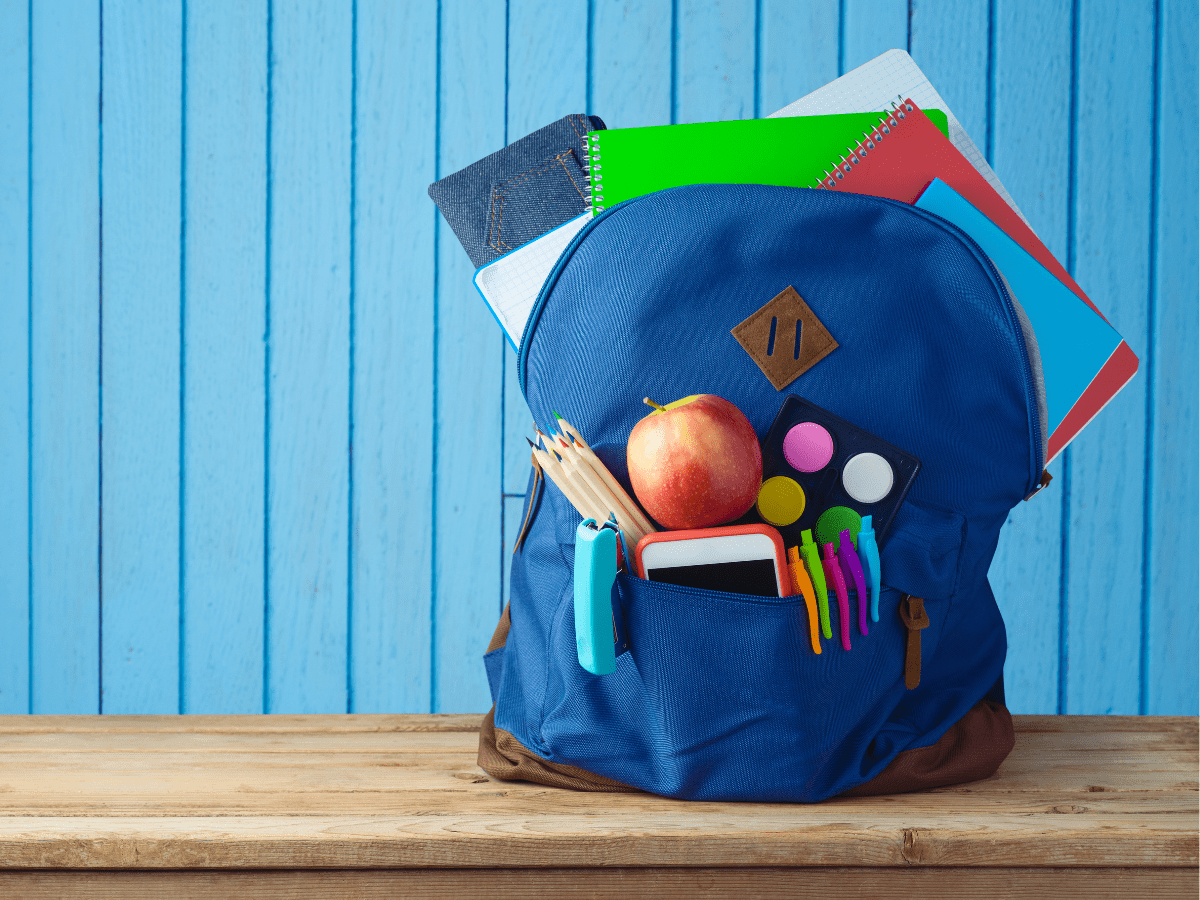
How to choose the right school bag
27. August 2024
Choosing a school bag is one of the important steps that parents take when preparing their child for school. Whether you have a first-grader at home and you are choosing a bag for the first time, or you have a schoolboy who needs to renew his briefcase, choosing the right school bag can be quite a challenge. It is not just a matter of choosing the one that will have the best image so that your child will like it, the most important parameter in the selection is above all health and safety.
Ergonomics and child health
The ergonomics of the school bag is key for proper posture and prevention of health problems. However, in school-aged children, we often encounter poor posture and pain in the locomotor system, especially in the back, which are caused by a number of causes. This mainly includes lack of movement (hypokinesis), incorrect posture, inappropriate arrangement of school furniture, obesity, etc. One of the causes of back pain and poor posture can also be an inappropriate school bag, often also its increased weight. That's a lot of reasons to be concerned not only with the right choice of bag, but also to focus on the arrangement or overall weight.
According to experts, a school briefcase should have several basic ergonomic elements:
- Padded and adjustable straps: The width of the straps should be at least 4-5 cm to distribute the weight evenly. The padding ensures comfort and prevents the shoulder straps from cutting into your shoulders. Some brands, such as Hama or Topgal, offer straps that are not only padded, but also breathable, which increases comfort during long-term wear. The inner side of the straps has an anti-slip finish. Straps should be adjustable with a length of at least 70 cm. Beware of excessively long straps with a protruding briefcase, which leads to increased lumbar bending and forward head movement.
- Shaped back: An anatomically shaped back panel is important, which supports the natural curvature of the spine. The back should also be breathable to prevent excessive sweating. E.g. models from the Ergobag brand often use special foam materials that ensure proper ventilation and comfort.
- Chest and Waist Straps: These straps help stabilize the briefcase and ensure that the weight is evenly distributed across the body. This is especially important for heavier content, where without these belts all the weight would be concentrated on the shoulders. The chest belt is used to prevent the shoulder straps from sliding down and better fit on the shoulder blades. On the contrary, the lumbar belt reduces the load mainly on the lumbar spine (by transferring the weight to the pelvis). For models from the Beckmann brand, the chest straps are adjustable to different heights, which allows adaptation according to the growth of the child.
Briefcase Weight
According to ČSN 796506, the weight of an empty briefcase for a 1st grade schoolboy should not exceed 1.2 kg, and 1.4 kg for 2nd grade children. For example, models from the brand Scout often weigh around 1 kg, while offering a solid construction and sufficient capacity.
The weight of a briefcase with learning aids is not determined by any standard here, however, it can be recommended that the maximum weight of the briefcase does not exceed 10-15% of the child's weight, which is often exceeded in practice. Parents should regularly check the contents of briefcases and exclude heavy and sometimes unnecessary items (e.g. larger bottles, heavy pencil cases, lessons from the previous day, etc.). However, even a schoolboy should learn to bring to school only those things that he really needs that day.
If the child is carrying heavier books, it may be useful to consider models with wheels that allow the briefcase to be dragged instead of being carried on the back.
Safety Features
Safety on the way to school is essential, and therefore the school briefcase should be equipped with a sufficient amount of reflective elements (up to 10% of the surface of the briefcase is recommended). These should be placed on the front, sides and straps. Some models from the Step by Step brand offer integrated LED light elements that increase the child's visibility even in poor lighting conditions.
Size and Organization
The size of the briefcase should be adapted to the age and height of the child. Briefcases with a volume of around 15-20 liters are suitable for the first grade of elementary school. The briefcase should not be wider than the child's shoulders to avoid restriction of movement. At the same time, the top of the briefcase should not exceed the shoulder line, so as not to limit the mobility of the cervical spine, and the bottom of the briefcase should properly end at the hip line, not below. The bottom of the school briefcase should have a solid and reinforced shape and legs that allow for stable standing.
A briefcase that is too large can be uncomfortable and distribute weight poorly, which can lead to incorrect posture. E.g. brands like Lässig or Herlitz offer different sizes of briefcases that are adapted to different age groups.
The internal arrangement is no less important. The briefcase should have enough compartments for easy organization of textbooks, notebooks, snacks and other school supplies. For example, separate pockets for a drink bottle, snack box or pencil case are practical. Some models from Coocazoo even have a special laptop pocket, which is suitable for older students.
Durability and Material
The material from which the briefcase is made should be light, but at the same time resistant to abrasion and moisture. Polyester and nylon are the most commonly used materials because they are not only durable but also easy to maintain. Some models from Satch use recycled materials, which is a great choice for parents who want to support eco-friendly products
Water resistance is another key feature – the briefcase should be able to protect the contents from rain or spills. To increase resistance, some models can be provided with impregnation or a special coating. Zippers and seams should be reinforced to withstand everyday wear and tear.
Aesthetics and Style
Children often prefer briefcases with popular motifs and colors. Brands such as LEGO or Disney offer a wide range of designs that will appeal to children of different ages. However, it is important to find a balance between the child's preferences and practical aspects. Children often choose based on appearance, but it is important that the briefcase meets all ergonomic and safety requirements.
Price vs. value
The price of a school bag can vary significantly depending on the brand, materials and equipment. A high-quality briefcase that meets all safety and ergonomic standards can cost from CZK 1,500 to CZK 4,000. Brands such as Samsonite or Beckmann are among the more expensive, but offer high quality, durability and thoughtful design. Conversely, more affordable briefcases from brands such as Herlitz or Ars Una may be suitable for parents with a more limited budget, without having to compromise on important parameters.
Reviews and Recommendations
It's a good idea to read reviews from other parents or experts before buying. Brands such as Scout, Ergobag or Step by Step are often recommended for their quality and reliability. Reviews of these products confirm that investing in a more expensive briefcase pays off in the long run, as it offers better ergonomics, durability and safety features
Choosing a school bag is an important step that can affect not only your child's daily comfort, but also his long-term health. Investing in a high-quality briefcase with ergonomic features, low weight and sufficient safety features pays off. When choosing, do not forget to take into account the individual needs of the child and regularly check whether the briefcase still suits his growth and changing needs.
Are your children suffering from back pain? Our experts are here for you! You can make an order on the phone number +420 607 001 007 or via the e-mail address info@ponseticlinic.cz.
The article was created in collaboration with MUDr. Sylva Gilbertová, CSc., who is a long-time member of the Czech Ergonomics Society.
We are Ponseti Clinic.
We give strength to rise.