
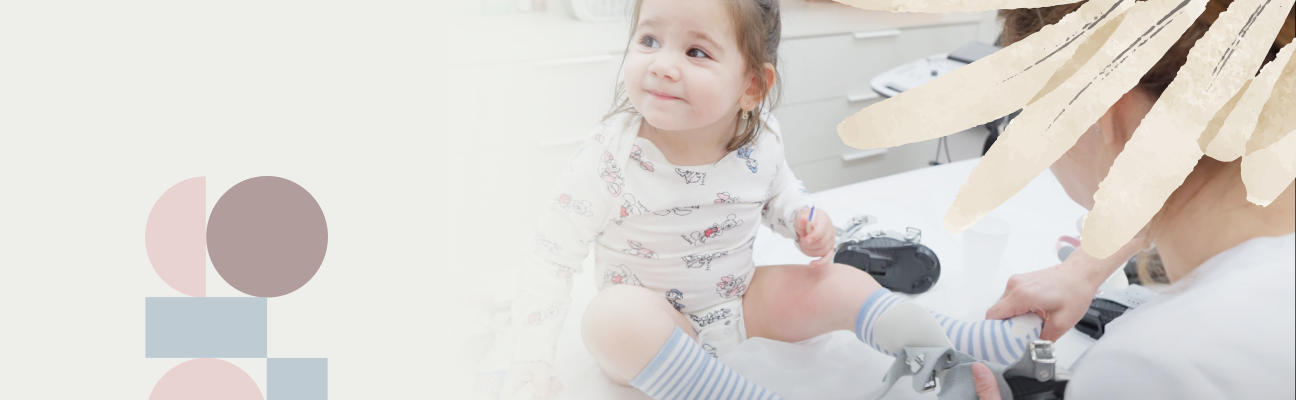
Helping children with clubfoot achieve fully functioning feet through the Ponseti method
8. July 2025
clubfoot, technically called Pes equinovarus congenitus, is one of the most common birth defects of the foot, affecting approximately one in a thousand newborns. This defect causes the leg to bend downward and inward, which can severely limit mobility and cause pain. Fortunately, there is a modern and very effective treatment known as the Ponseti method, thanks to which children with this disease can grow up with fully functional and healthy legs, without the need for complex operations.
Treatment begins immediately after birth - the key role of early diagnosis
Treatment of Pes equinovarus congenitus (PEC) should begin as soon as possible, ideally in the first weeks after birth. Time plays a crucial role, because the legs are still very flexible and respond well to gentle correction procedures.
"We always start the treatment by preparing the parents. The initial interview is important not only for passing on information about the nature of the disease, but also for establishing trust," says orthopaedic specialist and Ponseti method specialist MUDr. Michaela Kassai from the Ponseti Clinic. "I emphasize that the most intensive part of the treatment takes place during the first five years of the child's life. It is a demanding but very important collaboration - of experts and parents, who are irreplaceable in the treatment process."
Treatment of PEC requires an interdisciplinary approach. In addition to orthopaedic specialists, physiotherapists, clinical psychologists, prosthetists and, in some cases, family therapists also participate in the care of the child. Thanks to this, not only the correction of the legs is ensured, but also the support of the overall development of the child.
Correction Phase: Gentle Handling and Casting
The first phase of treatment with the Ponseti method is corrective. This consists in gradual gentle manipulations with the affected leg, which aim to gradually adjust its position. After each manipulation, the leg is fixed with a cast, which is usually changed at weekly intervals.
"The whole process requires patience and precision," adds MUDr. Kassai. "At the end of the correction phase, we often perform a percutaneous tenotomy, which is an outpatient and short procedure under local anesthesia in which we carefully sever the Achilles tendon. This step is necessary to achieve full ankle function and allow the child to move pain-free."
Splitting Phase: Maintaining Correct Position
After the last cast is removed, a maintenance, so-called splinting phase follows. This is as important as the correction phase, because it helps to keep the legs in the correct position and prevent the defect from returning.
Special abduction splints are applied almost continuously, up to 23 hours a day, especially during the first three months. The wearing time is then gradually shortened, mostly for overnight wear.
At this stage, the parents are thoroughly instructed on how to put on the splints correctly, how to perform stretching exercises for the muscles and tendons, and how to carefully monitor the condition of the legs to avoid complications. "Caring for a child during this phase requires a lot of attention and consistent cooperation," emphasizes MUDr. Kassai. "However, we are always ready to advise and help parents."
Physiotherapy as an integral part of treatment
In addition to the correction of the legs itself, regular physiotherapy is a very important part of the treatment. This usually takes place at least once a week, and its main task is not only to strengthen weakened muscles and tendons, but also to sensitively support the overall psychomotor development of the child. In children with PEC, this development may be slightly delayed at first, often by two to three months, therefore targeted care and stimulation is key to their healthy growth and movement independence.
Physiotherapy helps the child to gain not only the right strength and coordination of the legs, but also self-confidence and joy from each new step.
Together for a fulfilling life
Treating clubfoot is a journey that requires patience, determination and teamwork. However, with the help of the modern Ponseti method, experienced experts and the active support of parents, a real chance opens up for the child to grow up with healthy, fully functional legs and to experience childhood and adulthood without restrictions.
If you have received a diagnosis of Pes equinovarus congenitus, do not feel alone. We are here to guide you through each step of treatment and together support your child on the path to a healthy and active life.
We are Ponseti Clinic
We give strength to rise.